Chakra 3/7 · 10 petals
Solar Plexus Chakra
Maṇipūra
In short
What is the role of the solar plexus chakra?
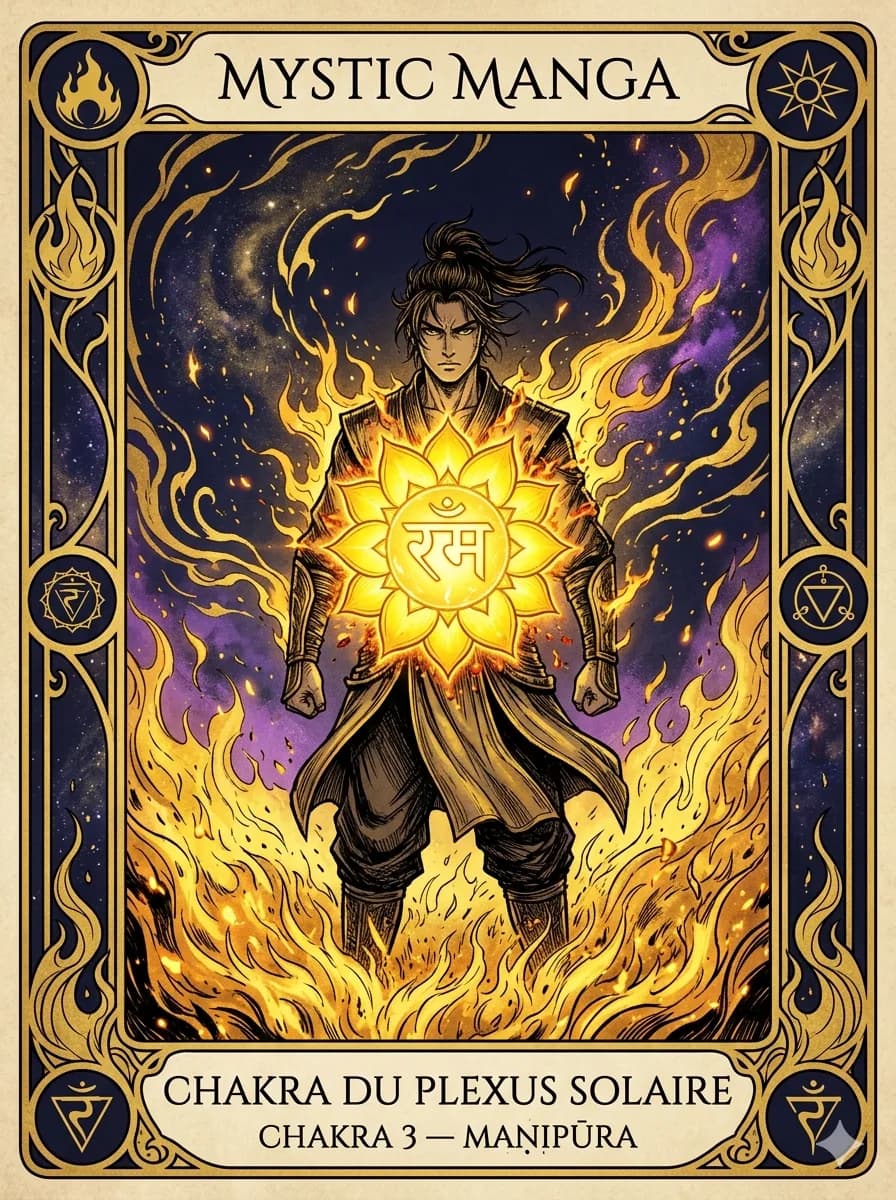
Maṇipūra, 'city of jewels' (maṇi: jewel, pūra: city or fullness), is the third chakra, seat of the inner fire (agni) in Tantric and Āyurvedic tradition. It is the center of personal will, the power to act, and self-confidence understood not as ego, but as a force of action aligned with dharma. The Fire element (tejas) governs here: heat, transformation, digestion, in the literal and symbolic sense. Maṇipūra transforms the raw energies of survival (Mūlādhāra) and desire (Svādhiṣṭhāna) into oriented and mastered action. The ten-petaled lotus of luminous yellow bears the syllables Ḍaṃ, Ḍhaṃ, Ṇaṃ, Taṃ, Thaṃ, Daṃ, Dhaṃ, Naṃ, Paṃ, and Phaṃ. Rudra (an aspect of Śiva linked to fire and purifying destruction) is the associated deity, with Lākinī as śakti. The symbolic animal is the ram, emblem of direct and ardent will. Tradition teaches that this chakra is the birthplace of psychological autonomy: the capacity to say yes and no from one's center, to make courageous decisions, and to assume one's own inner authority. Its flame, properly channeled, illuminates without consuming.
Color
Golden Yellow
Element
Fire
Mantra
RAM
Location
Solar plexus, between the navel and the sternum
🫀 In the body
Tradition associates Maṇipūra with the digestive system, liver, gallbladder, pancreas, and adrenal glands. Symbolically, it governs energy metabolism: the transformation of food into vitality, and experience into wisdom.
✨ When balanced
A harmonious Maṇipūra manifests as quiet inner confidence and a clear sense of identity and direction. Tradition associates this state with the ability to act with determination without aggression, to set healthy boundaries, and to assume responsibilities with ease. Personal energy is well managed: neither scattered nor accumulated as tension. Digestion, physical and emotional, occurs naturally, transforming experiences into learning.
🌑 Signs of blockage
Tradition symbolically associates a Maṇipūra imbalance with chronic lack of self-confidence and difficulty making decisions or asserting oneself. In excess, it may manifest as a need for control, authoritarianism, or uncanalized anger. Symbolic difficulties related to digesting life, ruminating, not moving forward, can signal an invitation to rekindle the inner fire.
🧘 Balancing practices
Tradition recommends for Maṇipūra fire and twisting postures (Navasana, Parivrtta Trikonasana, Dhanurasana), kapalabhati (breath of fire), and flame meditation (trāṭaka). The mantra RAM, chanted with power, is traditionally associated with this center. Citrine, yellow topaz, and amber are the stones traditionally linked to this chakra. Morning sun exposure, the practice of a personal discipline (martial arts, regular writing), and essential oils of juniper, ginger, or lemon complement harmonization paths according to traditions.
Affirmation
"I am the fire of my own life. I act with courage, clarity, and inner power."
Put it into practice
Two short quizzes to place where your energy actually sits today.
Frequently asked questions
What is the role of the Solar Plexus Chakra (Maṇipūra)?+
Maṇipūra, 'city of jewels' (maṇi: jewel, pūra: city or fullness), is the third chakra, seat of the inner fire (agni) in Tantric and Āyurvedic tradition. It is the center of personal will, the power to act, and self-confidence understood not as ego, but as a force of action aligned with dharma. The Fire element (tejas) governs here: heat, transformation, digestion, in the literal and symbolic sense. Maṇipūra transforms the raw energies of survival (Mūlādhāra) and desire (Svādhiṣṭhāna) into oriented and mastered action. The ten-petaled lotus of luminous yellow bears the syllables Ḍaṃ, Ḍhaṃ, Ṇaṃ, Taṃ, Thaṃ, Daṃ, Dhaṃ, Naṃ, Paṃ, and Phaṃ. Rudra (an aspect of Śiva linked to fire and purifying destruction) is the associated deity, with Lākinī as śakti. The symbolic animal is the ram, emblem of direct and ardent will. Tradition teaches that this chakra is the birthplace of psychological autonomy: the capacity to say yes and no from one's center, to make courageous decisions, and to assume one's own inner authority. Its flame, properly channeled, illuminates without consuming.
What are the signs of a blocked Solar Plexus Chakra?+
Tradition symbolically associates a Maṇipūra imbalance with chronic lack of self-confidence and difficulty making decisions or asserting oneself. In excess, it may manifest as a need for control, authoritarianism, or uncanalized anger. Symbolic difficulties related to digesting life, ruminating, not moving forward, can signal an invitation to rekindle the inner fire.
How do you balance the Solar Plexus Chakra?+
Tradition recommends for Maṇipūra fire and twisting postures (Navasana, Parivrtta Trikonasana, Dhanurasana), kapalabhati (breath of fire), and flame meditation (trāṭaka). The mantra RAM, chanted with power, is traditionally associated with this center. Citrine, yellow topaz, and amber are the stones traditionally linked to this chakra. Morning sun exposure, the practice of a personal discipline (martial arts, regular writing), and essential oils of juniper, ginger, or lemon complement harmonization paths according to traditions.
Explore further
Heart Chakra
Anāhata
🧘Throat Chakra
Viśuddha
🧘Third Eye Chakra
Ājñā
🏔️Tulpa: What She Actually Wrote
Visualization taken far enough to worry its author
🪷Samadhi
The 8 rungs, guided breath and self-inquiry
📖Grimoire
Crystals, herbs, mirror hours
🌙Lunar Calendar
Moon phases and rituals
📜Wisdom Codex
Deep esoteric articles