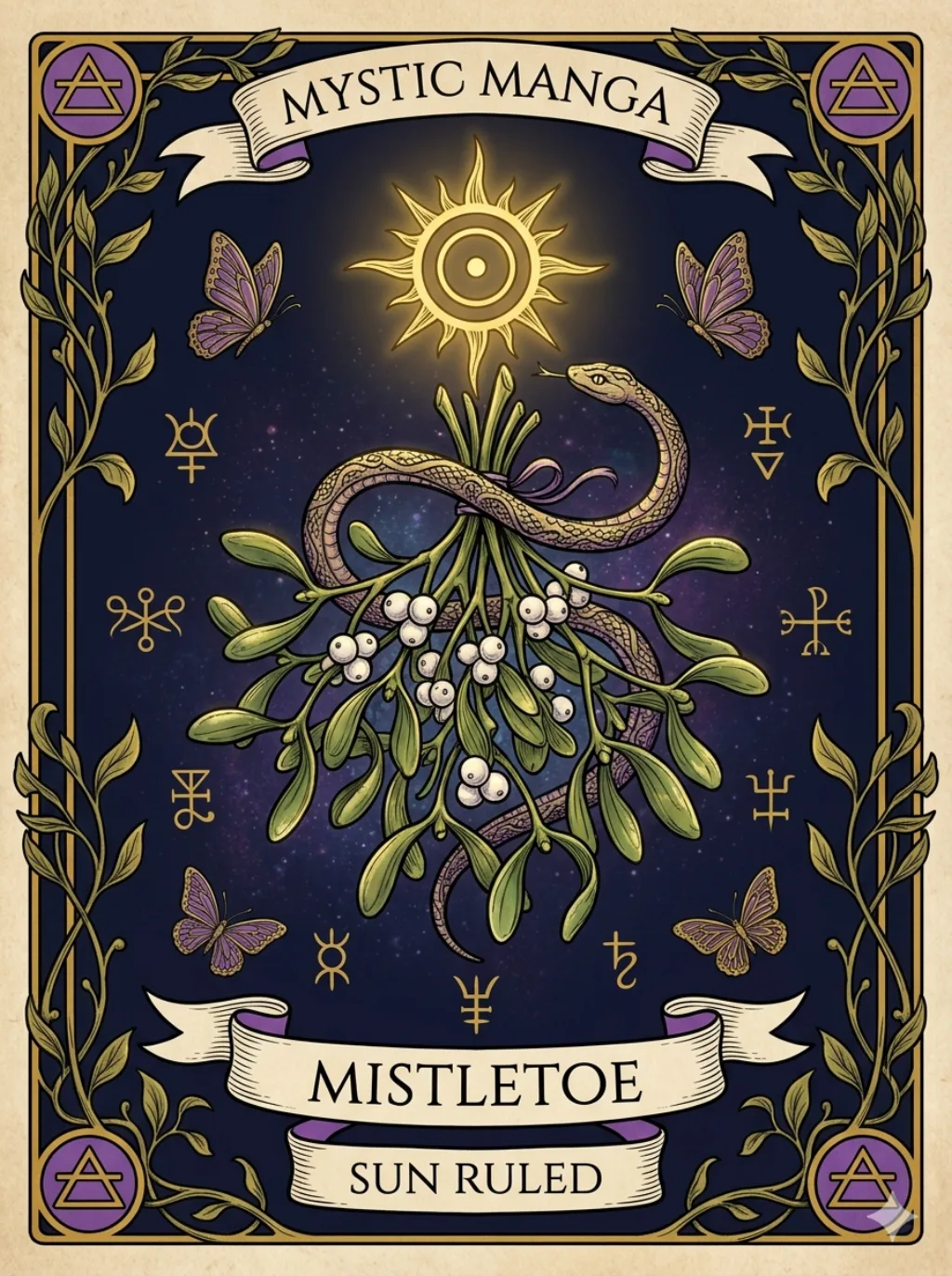
Mistletoe
Viscum album
In short
What are the magical properties of Mistletoe?
The golden bough of the druids. Mistletoe was cut at winter solstice with a golden sickle, never touching the ground.
Description
The golden bough of the druids. Mistletoe was cut at winter solstice with a golden sickle, never touching the ground.
Mistletoe (Viscum album), aligned with the Sun and the Air element, holds perhaps the most elevated position in druidic plant lore of any herb in the Western tradition. Pliny the Elder described the druidic harvest ceremony in extraordinary detail: white-robed druids climbed a sacred oak at the winter solstice, cut the mistletoe with a golden sickle, and caught the falling plant in a white cloth. It must never touch the earth, for it was neither of the earth nor of the sky but perpetually between both worlds. This liminal identity is mistletoe's entire magical signature: it is the plant of the in-between, growing parasitically between heaven and earth on its host tree, belonging to neither world fully and therefore possessing power in both. The Norse myth of Baldr, in which mistletoe, overlooked by Frigg when she extracted oaths of protection from all things, becomes the arrow that kills the sun god: establishes it as the one substance that exists outside normal cosmic law. This paradoxical quality gives it extraordinary protective and healing power: the druids called it the 'all-healer,' using it as a universal remedy for all ills. In contemporary practice, mistletoe is used in protective charms hung above doorways, love invitations (the kissing tradition preserves this ancient power), and winter solstice ceremonies. Mistletoe protection and fertility ritual use must be handled with full awareness of its toxicity.
Magical Properties
Fertility, Protection, Love, Healing, Druidic panacea, Peace.
Rituals
- ✦Hang dried mistletoe above the front door for protection, love invitation, and the blessing of all who pass beneath.
- ✦Harvest or obtain mistletoe at the winter solstice and consecrate it for year-round magical work at this peak of its power.
Botanical Data
Correspondences
Related Crystals (Air)
Related Herbs (Sun)
Explore further
Frequently asked questions
What are the magical properties of Mistletoe?+
The golden bough of the druids. Mistletoe was cut at winter solstice with a golden sickle, never touching the ground. Fertility, Protection, Love, Healing, Druidic panacea, Peace.
Which planet and element rule Mistletoe?+
Mistletoe (Viscum album) is ruled by Sun, associated with the Air element and the sign Leo.
How do you use Mistletoe in a ritual?+
Hang dried mistletoe above the front door for protection, love invitation, and the blessing of all who pass beneath. Harvest or obtain mistletoe at the winter solstice and consecrate it for year-round magical work at this peak of its power.